Hadley Quarry field trip
27 July 2016
On a balmy July evening in July, 10 of the group visited Hadley Quarry. The hamlet of Hadley is located to the West of Ombersley. Permission has to be granted in advance if you want to visit it. Both the Quarry and the associated cottage are part of the site and all thought it was well worth a visit. Bob, who led our visit, is the EHT champion for the site and turned out to be very knowledgeable about the geological aspects of the site and also the associated quarrying techniques.
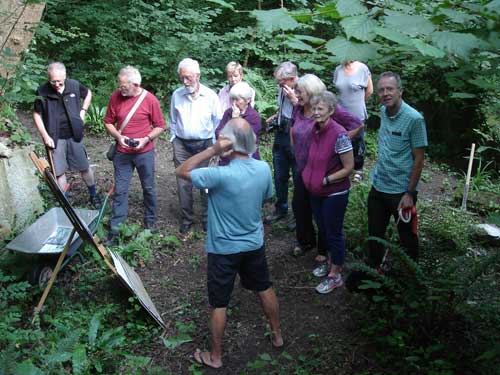
Bob's introduction, in the quarry itself.
We started off with the history and an explanation of the geology. It is situated on the Hadley Fault, which has Mercia Mudstone to the east and Bromsgrove Sandstone to the west. Both are Triassic in age, about 250 million years of age. At the time Britain was located in the norther tropics and was part of a supercontinent called Pangea. The Worcester plain at that time was hot, dry and flat. There were many small winding rivers producing a breaded river system known as the "Budleiighensis River". The river system would change course, so the sandstone that was being deposited altered in composition over time. Sometimes it would be red (in the air) and sometimes grey (in water). Bob explained that the grey sandstone was far better for building stone.
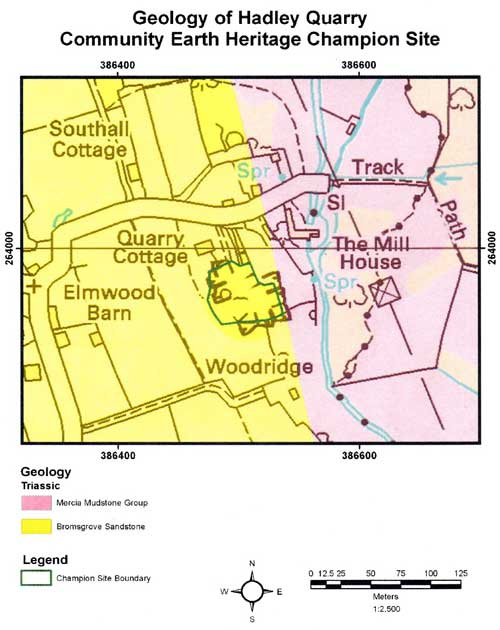
The first evidence of quarrying was in 1364 and it stopped in around 1880. Quarry Cottage was built in around 1890. The stone itself was used to construct both St. Stephen's Church, Barbourne (red stone) and St. Nicholas' Church in Droitwich (grey stone). Some recent evidence has been uncovered to prove that the stone has been used in Worcester Cathedral as well. The rock produces large bedding planes so is good as a building stone. Due to the braided river system there is evidence of cross bedding
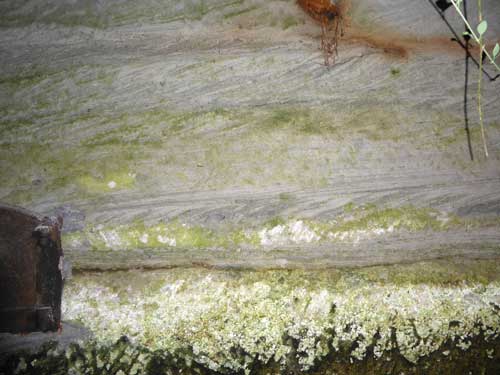
Cross bedding on the quarry face.
As we walked around the quarry Bob explained the techniques used to extract the stone. This was all done by cutting groves in the rock using a pick, in an identical manner to that used by the Romans and Egyptians. There is no evidence of using plug and feather techniques, despite what it says in the EHT leaflet on Hadley Quarry. Bob did a hands on demonstration of both techniques.
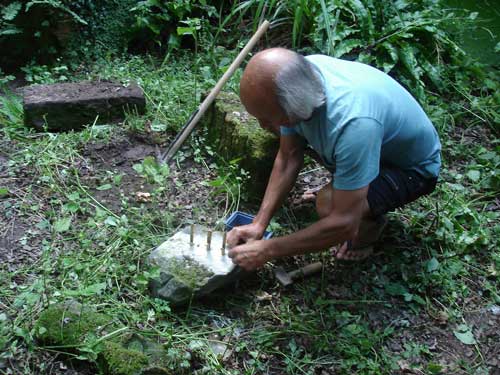
Bob showing the plug and feather technique. Note that the pick to his right is an original, found at the quarry.
Murchison visited the site in 1840 and found evidence of fossils - a decaying plant species which looks like rust in the sandstone. These are of the Echinostachys genus. We looked for some examples at the quarry face, but the best we discovered was in one of the building stones in the Quarry Cottage.
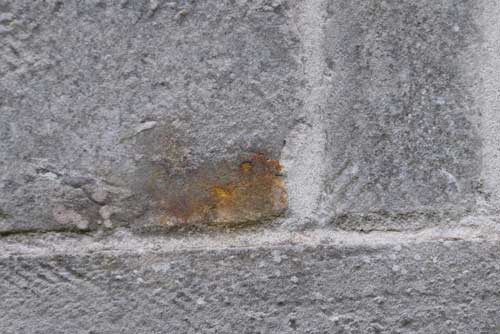
Echinostachys plant fossil cottage building stone.
Bob showed us the Quarry Cottage. He spent ten years extending the original building with stones from the quarry that he had acquired. Note that no actual quarrying was involved in this, just cutting to size. A labour of love I think.
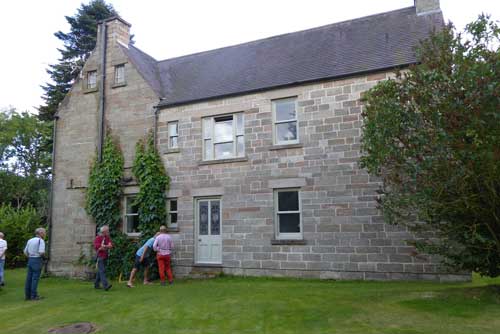
Quarry Cottage.
A most enjoyable short field trip, enhanced by Bob's obvious enthusiasm for the site, his detailed knowledge and hand in demonstration of quarrying techniques. We finished off with an excellent beer and dinner in the Hadley Bowling Green pub.